A short biography
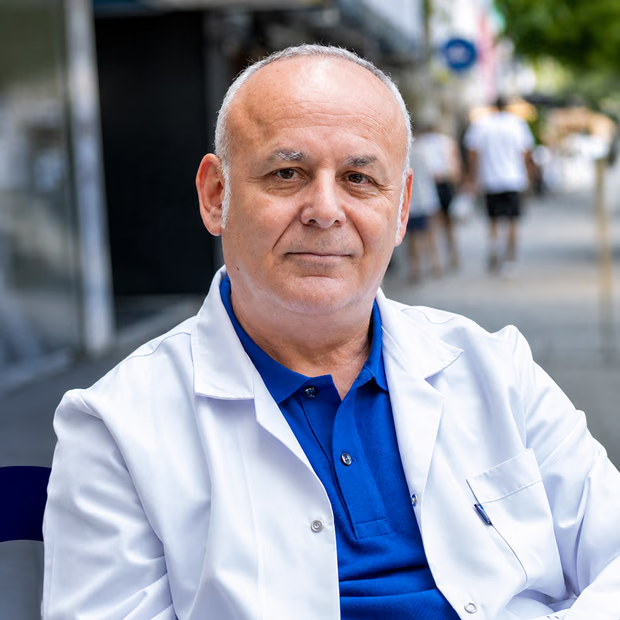
Op. Dr. Sunay Cafer was born in Bulgaria and completed his schooling there before qualifying in medicine at the Medical Faculty of Plovdiv in 1994. He went on to specialise in Otorhinolaryngology — ear, nose and throat surgery — at Gazi University in Ankara between 2000 and 2004.
Gazi was where the direction of his career was set. It is a department in which rhinoplasty is performed in high volume, and his interest in nasal surgery began there in 2000, under surgeons who were teaching it as a discipline in its own right rather than as an occasional addition to general ENT practice.
Over more than twenty years in practice he states that he has performed over 4,500 ENT operations and more than 1,000 rhinoplasty procedures. These are his own figures for his career record.
How he approaches nasal surgery
Coming to rhinoplasty from ear, nose and throat surgery rather than from general aesthetic surgery leaves a mark on how the operation is planned. The nose is examined from the outside and from the inside at the same consultation, and the airway is assessed as part of the plan rather than treated as a separate matter for another day.
In practice that means three things:
- Shape and breathing are planned together. A septal deviation found at examination is discussed as part of the operation, not deferred.
- Support is preserved. Structure that is removed cannot easily be replaced later; conservative resection and, where needed, cartilage grafting are preferred to aggressive reduction.
- Expectations are discussed before, not after. What can realistically change — and what cannot — is set out at consultation. No specific result is promised, because none can be.
Continuing education
Rhinoplasty technique has changed considerably over the last two decades, and Op. Dr. Sunay Cafer has followed those changes through hands-on courses with surgeons who introduced them in Turkey — among them Assoc. Prof. Dr. Barış Çakır, Dr. Emre İlhan, Dr. Sercan Göde, Dr. Fazıl Apaydın, Dr. Alpaslan Yıldırım and Dr. Ahmet Alp.
Languages
Consultations are held in Turkish, English, Bulgarian and Russian — by the surgeon himself, not through an interpreter arranged by an agency. For patients travelling from Bulgaria in particular, this means the consultation, the explanation of risks and the informed consent conversation all take place in their own language.
International patients
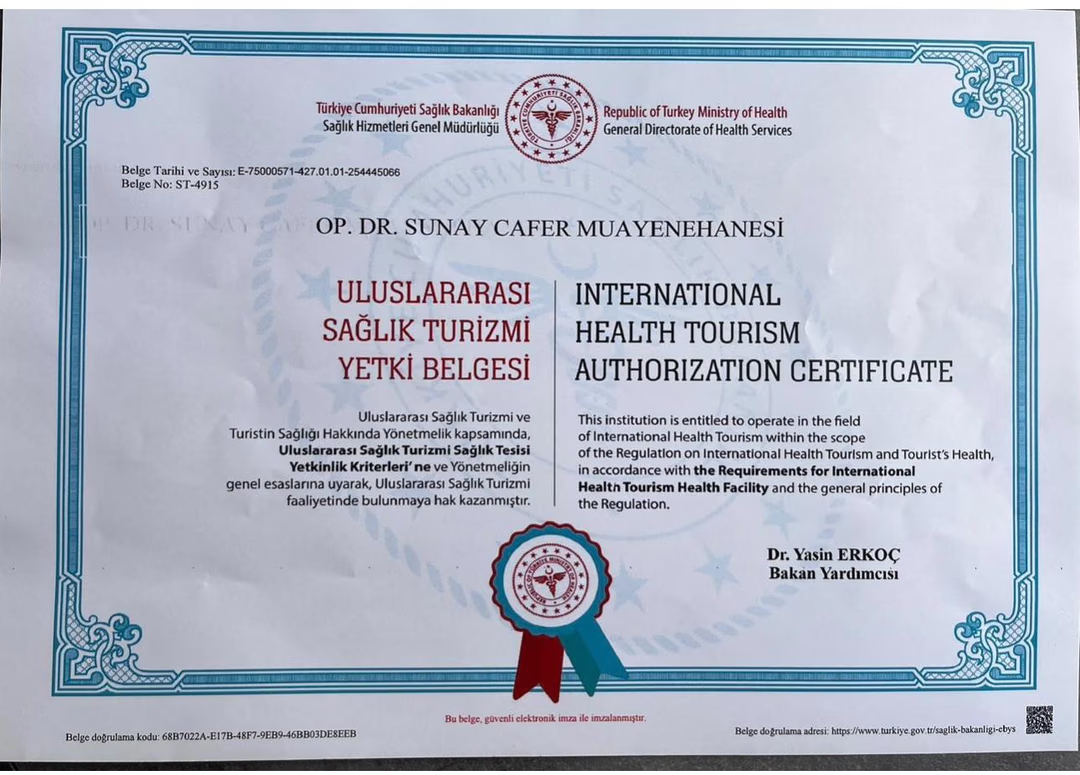
Op. Dr. Sunay Cafer holds an International Health Tourism Authorisation issued by the Republic of Türkiye Ministry of Health. Patients travelling from abroad can begin with an online consultation, but the surgical decision is always made after a physical examination in Izmir.